Showing posts with label communication. Show all posts

Wednesday, March 26, 2014

Re-imagining Alz: Dancing with Rose

Published May 31, 2007.
No doubt, living with dementia is a challenge. Whether caused by Alzheimer's Disease, vascular dementia or another cognition-altering malady, memory problems make it difficult to function in the world, difficult to relate to others.

I have frequently heard caregivers recommend Lauren Kessler's book Dancing with Rose: Finding Life in the Land of Alzheimer's. I finally made the time to read her account of working in the memory care wing of a skilled nursing facility.

Trained as a university professor, Kessler decided to work a minimum-wage job as a certified nurse assistant (or resident assistant as she calls it). She chose to do this as a way to pay homage to her mother who spent her last few years living with dementia.


Monday, May 6, 2013

Mother's Day Reflections: Literacy Lessons

Mom and Me - June 1965.
The book of Genesis claims that Adam named the animals prior to Eve's appearance in the Garden of Eden. I have a hard time accepting that part of the creation story.  In my own life, and in the lives of many others, it's Mother who names the world.
Photo by trec_lit

She just didn't teach me to identify the basics: cup, water, shoe, banana.  Over the years, she taught me to name and label things I couldn't hold in my hand: love, pain, divinity, irony.

My mother has a keen mind, and she's a lifelong student. Even when she quit her job teaching home economics to raise me and my two sisters, she still read voraciously, wrote in her journal, talked to like-minded friends and in all ways scrutinized the world around her.

At midlife, she returned to school and got a master's degree in a completely unrelated field, humanities.  I ended up doing the same: first studying English and then at midlife getting a master's in the unrelated field, aging studies.


Friday, February 8, 2013

Communication System Supports Senior Safety

Photo by oosp
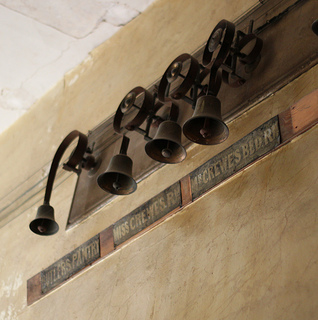
Wouldn't it be great if your parents could ring a bell and have servants come running?  21st Century technology offers help at their finger tips without the hassle of rigging the house with pull cords, ropes and bells--and without the expense of housing servants.

As our parents choose to age in place, it can be vital that they have the right kind of telephone system, one that is portable and has helpful features such as one-touch dialing, big buttons, reminder messages, and adjustable volume. 

Vtech Communications Ltd. has developed a product that has many features of a conventional phone system, but this product can increase functions if your parents' needs change.  Careline™ Home Safety Telephone System system has three components: 1) a touch-tone telephone base with corded handset 2) a cordless handset with its own charging base and 3) a pendant with its own charging base.  

Careline™ Home Safety Telephone System. 
The telephone base has four large buttons that you can program for one-touch dialing. You can add a photo that corresponds to each phone number: you, a neighbor, the local pharmacy, or 911.

The cordless phone has large buttons, a large display screen, volume controls, a speaker button and other features.

The wearable pendant phone has two one-touch dialing buttons. A parent might choose to program these to call an adult child's cell phone for one and 911 for the other.

The pendant is also able to receive phone calls, so if your parent doesn't reach their party with the first attempt, he or she can receive a return call.  Or if your parents are merely busy using both hands to fold laundry, garden or walking across the length of the house, they can still answer the pendant phone easily by just keeping the lanyard around their neck or on a clip (included) attached to a belt or pocket.

Thursday, January 10, 2013

Overcoming Communication Disorders

Photo by Karen D. Austin.
Children are little scientists.  They play a number of games centered on manipulating various aspects of communication.  Children explore the boundaries of language by using tin cans as an atypical medium, speaking in made-up code as a secretive symbol system, and playing telephone as a way to test consistency of content. While playing these games, they make small changes that affect the way they encode and decode information. 

These playful changes strain their friends' cognition, hearing, and speech to the point that the message is distorted. Communication then fails in entertaining ways. But when people have real problems communicating, the fun and games are over. 

For 50 years, Annie Glenn--childhood playmate and wife of astronaut and Senator John Glenn--struggled to communicate because of a serious stuttering problem.  She had difficulty talking on the phone, asking store clerks for help, giving directions to taxi drivers, greeting people at socials, and speaking in front of groups. Even reading aloud to her children was too difficult.  Her speech impairment was seriously affecting her day-to-day activities. 


In 1973, she participated in an intense three week program to help her better control her stuttering.  After receiving the help of qualified professionals, Annie can now manage her stuttering. She can talk on the phone, ask store clerks for help, speak publicly, greet people spontaneously  and read books to her grandchildren.  In addition to improvements in the quality of life with her husband, children, grandchildren and friends, Annie is now very active in a variety of organizations as a teacher, adviser, advocate, and public speaker.

Sunday, November 4, 2012

Talking with Older Adults in a Crisis

Photo by The National Guard
The prevalence of news stories about Hurricane Sandy this week reminded me of a set of guidelines I composed for how to talk with older adults in a crisis.

(For general information on how to cope in a crisis, see FEMA's page on the topic.)

Before getting to the specifics, it's important to avoid Elderspeak, a form of baby talk that people too often use to address older adults.

People are usually well meaning when they modify their speech this way, but the result too often is that the older adult feels patronized.

Read this post on Elderspeak to learn more about its features, tone and harmful effects.

Nevertheless, healthy aging does often require conversationalists to make some adjustments.  I suggest starting with a normal conversation features and then adjust as you receive input about possible limitations.

Don't start with the assumption that people have limits such as bad hearing and compromised cognition.  If you guess wrong, you've already broken trust.  The American Speech Language Association (ASHA) shares these tips for communicating with older adults.

These additional guidelines were composed in 2010 for local police officers interviewing older adults after suffering from an accident or from a crime, but they might be helpful in other crisis settings.  You can remember key points through the mnemonic E.L.D.E.R. 

Saturday, October 27, 2012

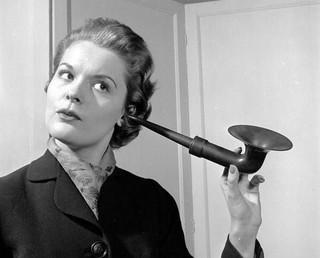
Hearing Loss Can Be Hard to Manage

Photo by Eknath Gomphotherium
On Thursday, I went to visit one of my friends who lives in a skilled nursing center.  She has a number of chronic diseases that she's managing with help from the staff, so I usually feel as though her situation is somewhat under control. This week, however, I watched her struggle to manage her latest challenge.

About a month ago, she suffered hearing loss that appeared at the same time that she fell and hit her head.  I am not a doctor, and I am not a member of her family, so I don't have access to her medical records. And she has cognition problems that prevent her from reporting what her doctor and her adult children tell her about her own health.

Consequently, I don't know for sure why she can't hear or whether she will ever fully regain her hearing. But I did observe these new communication challenges that have emerged:

Saturday, October 6, 2012

The Importance of Touch Persists through the Lifespan

Photo by Rosie O'Beirne
A couple of weeks ago, I visited a friend of mine who is currently residing in a skilled nursing home. Upon arrival, I discovered that she had a large bruise around her right temple and that she couldn't hear.  It was apparent that she had fallen.   Understandably, she was also a little bit disoriented and very emotional.

I first tried gesturing and encouraging her to read my lips. Nope. I tried to write messages to her. However, she was having trouble focusing and decoding even short, simple sentences that I wrote in large block letters using a black felt-tip pen. Finally, she said, "Give me a hug!"

Well, why didn't I think of offering a comforting touch as soon as I saw that she had suffered a fall?  And why did I still not think of it when my attempts to communicate by talking and then by writing were obviously failing?

Thursday, May 3, 2012

Modify Conversation with Older Adults As Needed


Photo by McBeth
How do you talk with older adults?

Communicating with older adults may not require any adjustments on the part of the speaker.

Often people 65 plus have no problems maintaining good communication.

Here is an overview of some communication challenges that might be at play.
  • Elderspeak on your part
  • Delirium from a treatable medical problem, such as an infection or dehydration
  • Dementia 
  • Hearing Problems
  • The Use of Touch to Communicate
  • Depression
  • Drug Interaction
  • Hospital-induced Delirium

See the list of links below for more detail about many of these challenges. 

Most older adults only have mild communication challenges if any, so don't let this list and the links let your imagination run wild.   But cautiously and calmly consider whether the communication problems you perceive need some kind of intervention, including changes in your own communication choices. 

If you interact regularly with the same person, you will soon see his or her typical needs for clear communication. If you work with the general population and only the occasional older adult, it make take you a while to hit the mark correctly. Again, you do not want to treat people as feeble minded or childlike, but you do want to accommodate their communication needs if possible.


Wednesday, April 25, 2012

Elderspeak: Babytalk Directed at Older Adults

Photo by Neighborhood Centers
About a year after I started volunteering at a skilled nursing home, I observed a set of new teenaged volunteers who came to help with a craft at the monthly meeting of the Red Hat Society.  

I heard several of the volunteers speak slowly and loudly, using a sing-song voice.  In response, I saw many of the residents roll their eyes.   

Unfortunately, I had flashbacks to when I first started as a volunteer.   I had altered my speech inappropriately as well, hoping to be supportive but coming off as patronizing instead.


I have since learned to identify the features of elderspeak.  More importantly, I’ve learned to change my attitude.   

[Note: The links to this post were refreshed in January of 2018 to reflect current research.]

At its core, elderspeak communicates a condescending attitude.   And from that attitude the person’s language might demonstrate the following features of elderspeak:
  •  Speaking slowly
  •  Speaking loudly
  • Using a sing-song voice
  • Inflecting statements to sound like a question
  • Using the pronouns “we,” “us,” and “our” in place of “you.”: “How are we doing today?"
  • Using pet names such as “sweetheart,” “dearie,” or “honey"
  • Shortening sentences
  • Simplifying syntax (sentence structure)
  • Simplifying vocabulary
  • Repeating statements or questions
  • Answering questions for the older adult: “You would like your lunch now, wouldn’t you?”
  • In other ways talking for the older adult: “You are having a good time on the patio today, I see. And you have your pink sweater on, which you love. Right?”
  • Asking people questions that assume role loss, idleness and powerlessness such as “Who did you used to be?” “What did you used to do?” 

This post also appears at the fabulous blog Changing Aging.  

Friday, March 23, 2012

On the Tip of My Tongue

Photo by mademoiselle lavender
“Oh, she was in Gone with the Wind and Streetcar Named Desire. Don’t tell me. I’ll think of it. . . Vivien Leigh!”

People of all ages have trouble retrieving names at times. However, as we age, this phenomenon occurs more frequently. 

Neurologists and speech language pathologists have numerous explanations for memory problems.  Some are a result of injury or disease.  Others are merely the result of healthy aging.    Retrieving a name is just one small aspect of memory.

It’s usually part of healthy aging to sense that retrieval of a name is imminent but not forthcoming.  Numerous theories exist for explaining specifically what causes these mental blocks. 

Although described earlier by William James and other psychologists, it wasn’t until 1966 that the research team of Roger Brown and David McNeill published an empirically based study that dubbed this frustrating memory problem “Tip of the Tongue Syndrome” or TOT.


Wednesday, February 29, 2012

Hear We Go! Gender and Hearing Loss

Photo by Simon James
Age is the strongest predictor of hearing loss. A population-based study of 3,556 participants in Beaver Dam, Wisconsin showed the hearing loss in increasing percentages by age bracket:

21% of 48-59 year olds
44% of 60-69 year olds
66% of 70-79 year olds
90% of 80 to 92 year olds

(Data adapted from Table 5)


Aging is often a gendered experience. As women age, they are at greater risk of living alone, being in poverty, suffering from depressing and developing certain physical problems such as osteoporosis, hypothyroidism, and fibromyalgia. Men, however, experience a greater risk for hearing loss. There are various hypotheses for why men are at greater risk. Men often participate in recreational activities and occupations that have high decibel levels, including military service.

Wednesday, February 22, 2012

Bingo--More Than Meets the Eye

Photo by Kimberly Malvar
Attending Monday bingo in the skilled nursing center for fifteen months has shown me that this supposedly simple game requires the players to manage multiple skills.
Players must have adequate vision, hearing and the fine or gross motor skills to play. 
During a round, someone asks, "Did the caller say '50' or '60'?" They also need the cognition to retain the number in their mind while scanning each number on three cards.

For reasons having to do with vision or with cognition, sometimes a 3 will look like an 8, a 7 like a 1. They also have to perceive the winning patterns.

Almost each resident in skilled nursing has trouble with at least one of these tasks, but they find ways to accommodate age-related changes.

Laura sits at the front table so that she can see each ball as it comes out of the mixer. She relies on her vision since her hearing is impaired. Sam uses large-print cards. Bill places his cards on a non-stick mat and wears gloves that keep his fingers from forming a fist. These aids help him push the windows closed without the assistance of a staff member or volunteer.

A handful of residents have every skill set required to play bingo. They just have lower-body challenges to manage, so once they maneuver their wheelchair into place, they are ready to play without impediment.

Betty receives gentle reminders from a volunteer about when she can call bingo. Even though she struggles to remember that five numbers in a row is the desired pattern, she shows great accuracy each week over the course of 11 games in finding the called numbers on her cards. Even though she has memory problems, she still possesses enough skill with her hearing to help others at her table.

Residents at tables throughout the dining room take turns helping each other in this way: one might have the better hearing, her neighbor the better vision. This co-operation reinforces the importance of social skills required for bingo. They tease each other for winning too often or not at all.

Gladys wins the current round, so she receives a dollar in winnings. The caller shouts out, “If there are no others, this round is closed. Clear your cards.” An adult son walks into the dining room and pulls a chair next to his father. Another resident comes in from an appointment in the beauty parlor and tries her luck for the last two games.

The weather outside worsens. Everyone looks up to see the rain splashing heavily against the windows before turning to hail. The noise of the storm mixes with the sound of the bingo balls tumbling in the cage. One by one, the numbered balls escape down the shoot and line up to be called in the next game.

Related:

Is It Dementia or Only Delirium?
Age-related Changes to How We Write
Activities of Daily Living and Instrumental Activities of Daily Living
Don't Be a Boy Scout: Preserving the Independence of Older Adults

Friday, February 17, 2012

Age-Related Changes to How We Write

Photo by Marc Moss
With the boomers moving into late adulthood, many are posing questions about what constitutes healthy aging in a variety of areas such as cardiovascular health, respiratory health, and cognitive health.

Unfortunately, more research to date has been done with diseased older adults as opposed to healthy older adults. Older adults would benefit from learning what changes might be disease related and what changes are normal and expected as part of healthy aging. Gerontologists and other scholars are now starting research to rectify this ommission in the literature. Nevertheless, some research exists here and there that describes healthy aging.

For example, T. L. Mitzer and S. Kemper published a study in 2003 that analyzed the biographical statements of 118 older women (ages 78 to 91) in an effort to find an explanation for what contributed to stronger writing samples. Strong writing samples did not correlate to the writer's age. Instead, strong writing was produced by those who were in better physical condition, had higher educational levels and higher cognitive status. The high-level writing samples had the following characteristics: less-varied vocabulary, longer utterances, more clauses per utterance, more grammatically complex structures, fewer fragments.